
Mars
مریخ
Mars is a reddish planet and the fourth planet from the sun. It is the planet that comes closest to the Earth.

Mercury
عطارد
Mercury is a moonless planet; it is the planet closest to the Sun.
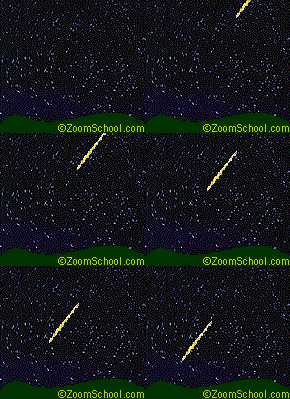
meteor
شهاب
A meteor is a meteoroid that has entered the Earth’s atmosphere, usually making a fiery trail as it falls. It is sometimes called a shooting star. Most burn up before hitting the Earth.

meteorite
شهاب سنگ
A meteorite is a meteor that has fallen to Earth. Meteorites are made of stone, iron, or stony-iron.

meteoroid
شهاب سنگ در حال حرکت در فضا
Meteoroids are tiny stones or pieces of metal that travel through space.

meteor shower
شهاب باران
A meteor shower is when a lot of meteor fall through the atmosphere in a short time.

Milky Way
راه شیری
The Milky Way is a bright line of stars stretching across the night sky.

Milky Way Galaxy
کهکشان راه شیری
Our solar system is in the Milky Way galaxy. We can see the Milky Way as a band of stars in the night sky.

moon
ماه
The Earth has one moon. The moon has no atmosphere. The same side of the moon always faces the Earth.

nebula
نبولا
A nebula is a cloud of gas and dust in space.

Neptune
نپتون
Neptune is the eighth planet from the Sun. This frozen planet has 8 moons.

North Star
ستاره شمالی
The north star is a star that is located almost due north and is useful for navigation. Polaris is currently the pole star of the Northern Hemisphere.

observatory
رصدخانه
An observatory is place where people observe the skies, using a device like a telescope.

orbit
مدار
The Moon orbits the Earth. The Earth orbits the Sun.
phases of the Moon
گام های ماه
As the moon circles the Earth, the shape of the Moon appears to change. The phases of the Moon are: the new moon, waxing crescent, first quarter, waxing gibbous, full moon, waning gibbous, last quarter, and waning crescent.

planet
سیاره
Eight planets and one dwarf planet orbit our Sun.

planetarium
سیاره نما
Planetariums put on star shows that teach astronomy.

Pluto
پلوتون
Pluto is a dwarf planet that is uaually farther from the Sun than any of the planets (Pluto was considered to be a planet until 2006). Pluto’s moon is called Charon.

quasar
کواسار
A quasar is a distant energy source in space which gives off large amounts of radiation.

satellite
ماهواره، قمر مصنوعی
Satellites orbit the Earth.

Saturn
زحل
Saturn is the sixth planet from the Sun. It has beautiful rings.
shooting star
ستاره تیر شهاب
A shooting star is not a star; it is a meteor (made of rock and/or iron) which is burning up in the Earth’s atmosphere.

Solar System
منظومه شمسی
In our Solar System, eight planets, one dwarf planet, many asteroids, comets, and other objects orbit around our sun.

space shuttle
شاتل فضایی
The space shuttle flies into space and back down again, carrying people and equipment.

spacesuit
لباس فضانوردی
Astronauts wear spacesuits when they walk in space.

stars
ستارگان
Each of the stars we see in the night sky is another sun, but much farther away than our sun.

Sun
خورشید
The Sun is a medium-sized yellow star in our Solar System. We get our light and most of our energy from the Sun.

Uranus
اورانوس
Uranus is the seventh planet from the Sun. Uranus looks bluish and is covered with clouds. It has an unusual, tipped axis, which gives it extreme seasons.

Venus
زهره یا ناهید
Venus is the second planet from the Sun and the hottest planet in our Solar System. From the Earth, Venus is the brightest object in the sky except for the Sun and the Moon.

zodiac
دایره البروج
The zodiac is a band of 12 constellations (groups of stars) in the sky, including Capricorn, Aquarius, Sagittarius, Scorpio, Libra, Virgo, Leo, Cancer, Gemini, Taurus, Aries, and Pisces.